Why Are Cosmetics Certified?
Certifications help consumers better understand the products they buy. They indicate that a cosmetic product meets a set of specific criteria relating to factors such as its ingredients, the origin of its raw materials, manufacturing methods and environmental practices.
However, each certification has its own set of standards and does not necessarily guarantee the same things. Some place greater emphasis on the proportion of organic ingredients, while others focus on the natural origin of ingredients or the absence of animal-derived substances. That’s why it’s helpful to understand what each logo represents and the commitments behind a product.
Key Certifications to Know
Several of our products carry certifications that help clarify their commitments. Here are some of the main logos you may find on our natural and organic cosmetics, along with what they mean.
COSMÉBIO: A Guide to Natural and Organic Cosmetics
Founded in France in 2002, the COSMÉBIO association aims to regulate the organic cosmetics market and support industry professionals. Its label helps consumers more easily identify natural and organic cosmetics that meet a specific set of standards, as well as a charter outlining values and ethical commitments.
There are three logos associated with COSMÉBIO, which distinguish certified products according to different standards: the former COSMÉBIO BIO standard, COSMOS NATURAL and COSMOS ORGANIC. Since 2017, newly certified products have followed the COSMOS standard, which harmonizes certification requirements for natural and organic cosmetics.
COSMÉBIO BIO: The Former Standard
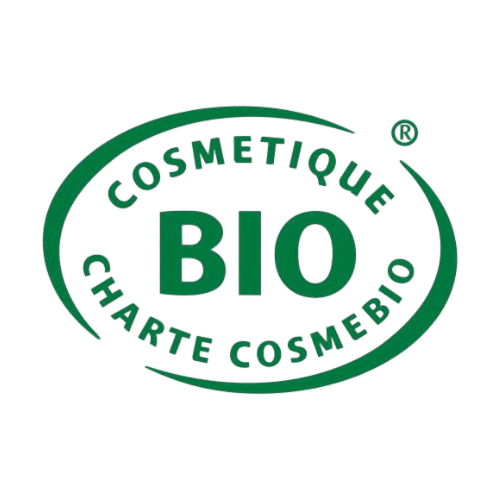
This logo refers to the original set of standards established by the association. To qualify, a product had to meet the following requirements:
- At least 95% naturally derived ingredients in the finished product.
- At least 95% organic ingredients among plant-based ingredients.
- At least 10% organic ingredients in the finished product.
COSMOS NATURAL: Natural Certification
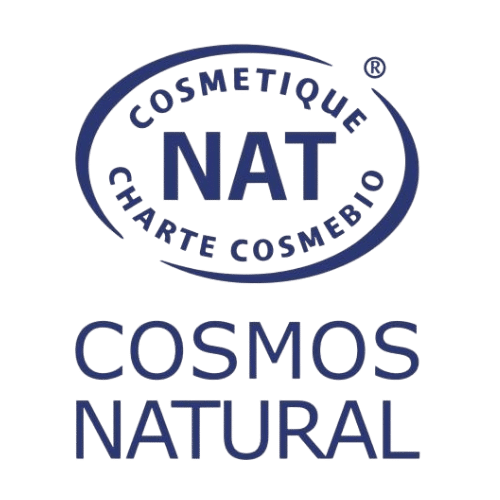
This logo identifies natural cosmetics certified according to the COSMOS standard. The standard restricts the use of permitted petrochemical-derived ingredients and sets limits on their concentration. There is no minimum percentage of organic ingredients required.
COSMOS ORGANIC: Organic Certification
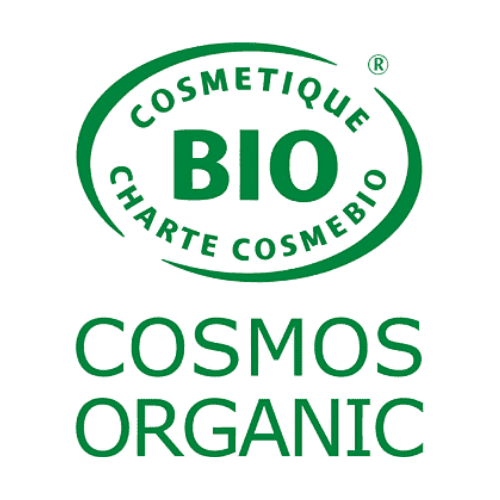
This logo identifies organic cosmetics certified according to the COSMOS standard. Products must meet the following requirements:
- At least 95% naturally derived ingredients in the finished product.
- At least 95% organic ingredients among those eligible for organic certification, such as plant-based ingredients, beeswax and milk.
- At least 20% organic ingredients in the finished product, or 10% for certain product categories, including rinse-off products.
Good to know: Water and minerals cannot be considered organic because they are not grown or cultivated. They are therefore excluded from the calculation of organic ingredients.
ECOCERT: An Independent Certification Body
Founded in France in 1991, ECOCERT is an independent organization that verifies whether products meet the requirements of recognized standards. In the field of natural and organic cosmetics, it is one of the certification bodies authorized to certify products according to the COSMOS standard.
Its work involves assessing various aspects, including product composition, ingredient origins, manufacturing processes and compliance with environmental requirements. This process helps confirm that a product meets the criteria of the certification it carries.
VEGAN Certification: Products Free from Animal-Derived Ingredients
Vegan certification helps identify products that contain no animal-derived ingredients or by-products. This excludes ingredients such as honey, beeswax, lanolin (derived from sheep’s wool) and milk.
Vegan products may contain plant-based, mineral or synthetic ingredients. However, it’s important to remember that a vegan claim does not automatically mean a product is natural, organic or cruelty-free. These criteria depend on the specific requirements of each certification.
It’s also worth noting that the European Union has prohibited animal testing for finished cosmetic products since 2004 and for cosmetic ingredients since 2009. The ban on marketing cosmetics tested on animals to meet regulatory requirements was phased in between 2009 and 2013.
How Can You Identify Certifications on Product Packaging?
Certification logos are generally displayed on cosmetic packaging, but it isn’t always easy to know what they represent. Some identify a product as natural or organic, while others indicate specific commitments, such as the absence of animal-derived ingredients.
Certification logos are generally displayed on cosmetic packaging, but it isn’t always easy to know what they represent. Some identify a product as natural or organic, while others indicate specific commitments, such as the absence of animal-derived ingredients.
Certifications are valuable guides that help us better understand the ingredients in cosmetics and the commitments behind them. Knowing what different labels guarantee makes it easier to choose products that align with our preferences and values.
Looking for products to care for yourself?
→ Explore our Personal Care selection and find products suited to your needs.